Article Read Time - 8 Mins
How to Take Care of Tangled Hair (and Stop It Coming Back)
Table of Contents
Why Does Hair Get So Tangled?
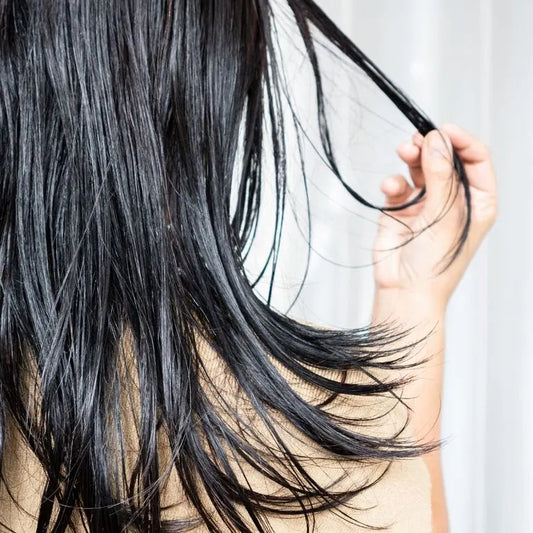
Knotted hair and tangled hair is frustrating, and we've all considered just ripping or cutting it out. After all, you've probably been trying to get a brush through your mane for the last five minutes. In any case, there's only so much pain you can tolerate, as well as time you have, before you need to admit defeat.
But you really don't need to use scissors and attempt a DIY haircut. In fact, there's a whole host of simple tricks that can help detangle your hair, however long it may be or whether it's hair extensions.
Plus, we even have some advice to help you prevent tangles and knots in the first place. Just think of us as your haircare fairy godmother…
The Real Reason Hair Tangles
To understand why your hair is tangled, it helps to know a little about the hair cuticles, which are the tiny overlapping scales on each strand.
Quality Remy hair has cuticles all running in the same direction, like roof tiles. This means everything stays smooth and the cuticles glide past each other nicely. 100% Remy hair, then, is the most tangle-resistant option in hair extensions.
On the other hand, in the case of non-Remy or damaged hair, cuticles will be going every which way. As a result, these cuticles catch on one another and create knots.
That is a big part of why hair tangles happen so easily. It certainly helps explain why investing in extensions made from proper Remy hair can make such a difference.
Common Everyday Causes
Some of the most common reasons why your hair might tangle are:
- The tresses being too dry.
- The use of cheap and harsh products.
- Over-washing and massaging too hard when using shampoo.
- Excessive heat styling.
- Rubbing your hair with a towel.
- Wind blowing through your hair.
- A failure to brush your hair.
- Sleeping with your hair down.
Do Hair Extensions Tangle More Than Natural Hair?
No, not necessarily; at least, if you’re using the right ones.
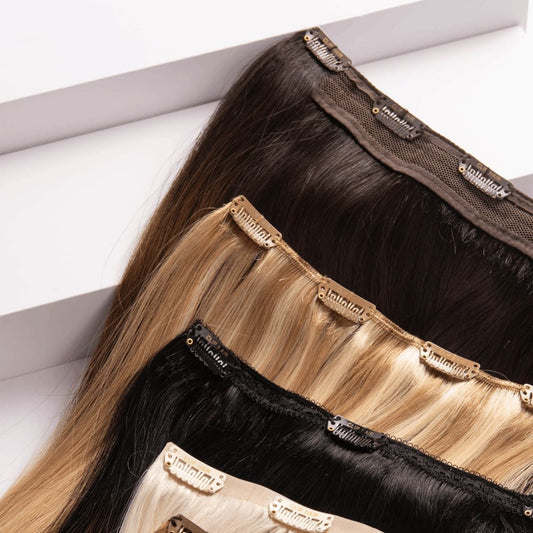
For over 17 years here at Cliphair, we’ve specialised in extensions made from ethically sourced, 100% Remy human hair. Cuticle-correct hair pieces like these tangle far less than synthetic or non-Remy alternatives.
Double-drawn or seamless options, such as our Seamless clip-in extensions, require particularly little maintenance because their strands are more uniform. These clip-ins are the least tangle-prone option.
If you’re comparing options, our guide on which hair extensions are the least damaging can help you choose the best fit for your hair type.
How to Detangle Hair Step by Step
Detangling Wet Hair
Wet hair is more fragile than dry hair, so you’ll need to take a gentle approach.
Here’s how to detangle hair safely after washing:
- Spritz on a detangling spray or work in some leave-in conditioner.
- Allow it to sit for a minute or two.
- Divide your hair into sections.
- Start at the ends and work gradually upwards towards the roots.
- Add extra product to stubborn areas if needed.
Remember: to detangle hair, you should never start brushing from the roots down. This will simply push your knots together and make them harder to remove.
To help achieve even smoother results, look at our guide on how to get shiny hair.
Detangling Dry Hair
Are you working with dry knots? If that’s a “yes”, make sure you slightly dampen the area with water or a leave-in conditioner first.
Then, you’ll basically be following the same method as you would with wet hair. That means reaching for a wide-tooth comb or detangling brush and starting at the ends, working upwards slowly. Hold sections firmly to avoid pulling on the scalp.
This method will help you detangle hair with minimal breakage.
Detangling Without a Brush or Comb
If you don’t have a brush to hand, try to find a comb. But if you can’t find one of those either, all is not lost. You’ll just have to put your hands to good work.
Start by separating your hair into sections with your fingers. Wet the area with a detangling spray, conditioner, or water, and gently run your fingers through the tangles.
Think of it like a homemade hairbrush…
How to Detangle Hair Extensions Without Damaging Them
Extensions do need a little extra care when you’re trying to detangle them. However, this doesn’t have to be a stressful process.
Always hold the hair at the root and close to the attachment point, weft, or clip before brushing. This prevents unnecessary tension and protects both your natural hair and the extension.
Then:
- Start brushing at the ends.
- Work upwards gradually.
- Brush in small sections.
- Never yank or pull through resistance.
It’s also worth making sure you’re using the right brush. Steer clear of brushes with bobbled tips that can snag on extension attachments. A dedicated extension-friendly detangling brush will normally be the safest choice.
If You Wear Clip-Ins
Great news: clip-ins are the easiest type of extension to detangle.
There are still a few important things to bear in mind, though. To get the best results:
- Remove your clip-ins before detangling.
- Brush the extensions and your natural hair separately, not together.
- Reattach once both the clip-ins and your natural hair are knot-free.
For more detailed tips, read our complete guide on how to detangle clip-in hair extensions.
If You Wear Tape-Ins, Wefts, Nano Rings or I-Tips
With professionally fitted permanent extensions, it’s crucial to take extra care around attachment points.
That means you should:
- Brush gently around bonds and attachments.
- Work away from the roots.
- Detangle small sections at a time.
- Avoid pulling directly through the attachment area.
If a knot sits particularly close to the bond, tape, weft, nano ring, or I-tip attachment, or if it doesn’t budge, reach out to your hair extension specialist. Don’t attempt to remove, reposition, cut, or pull apart the attachment yourself.
How to Get a Stubborn Knot Out of Your Hair
Loosening a Single Knot
If a knot is especially stubborn:
- Wet the tangled section.
- Apply conditioner or a few drops of hair oil.
- Allow it to soak in briefly.
- Use your fingers or a comb to gently tease open the outer strands.
- Work inward gradually.
- Finish with a wide-tooth comb.
When you’re trying to loosen a knot, patience is everything. Small movements will give you much better results than force.
When Cutting Might Be the Last Resort
Thankfully, if you follow the steps above, it’ll rarely be necessary for you to cut out a knot. But if you do find yourself having to go for this “nuclear option”, make sure you keep it to natural hair only.
For a tricky knot that is close to a tape, weft, nano ring, or other professional extension attachment, don’t attempt to cut or remove anything yourself. Instead, contact your hair extension specialist.
What Not to Do
Avoid these common mistakes when you’re trying to detangle hair.
- Don’t rip or force a brush through a knot.
- Don’t skip conditioner.
- Don’t use a fine-tooth comb on badly tangled sections.
How to Stop Hair From Tangling in the First Place
Daily Habits That Make the Biggest Difference
Are you wondering how to avoid tangled hair altogether?
In that case, try to follow these simple habits, which can make a huge difference:
- Brush before washing.
- Use your fingers before reaching for a comb.
- Shampoo only the scalp and condition the lengths.
- Brush from the ends to the roots.
- Keep your hair hydrated.
- Limit excessive heat styling.
Remember: when it comes to avoiding tangles, consistency beats complicated routines every time.
Nighttime Protection
A lot of knots in hair develop while you sleep.
You can, though, minimise overnight tangles by:
- Sleeping on a silk pillowcase.
- Wearing a loose braid or bun.
- Avoiding sleeping with your hair completely loose.
- Removing clip-ins before bed.
Take these steps, and you can expect to wake up with smoother hair, with less time needing to be spent on morning hair untangling.
Protecting Extensions From Tangling
If you’re an extension wearer, doing these extra things will further help prevent tangling from becoming a problem for you:
- Storing clip-ins properly when you aren’t wearing them.
- Removing your clip-ins before you sleep, shower, or swim.
- Brushing your extensions daily, even when you aren’t adding new pieces.
- Keeping your hair pieces clean and moisturised.
Best Products and Tools for Tangled Hair

Detangling Brushes and Combs
The right brush can make a massive difference to your efforts to keep on top of tangling.
In that sense, our own Detangling Brush here at Cliphair, also known as “The Wet One”, is a gamechanger. Its soft and flexible bristles glide through knots.
This brush is a safe option for detangling both wet and dry hair, and it’s suitable for all hair types, including extensions. The anti-slip grip is also brilliant when your hands are covered in conditioner.
See our full guide to hairbrush types for expert advice on choosing the right brush. You can also explore more options in our wider range of hair care and accessories.
Detangling Sprays, Conditioners and Leave-Ins
If you’re serious about preventing tangles, hydration is one of the biggest factors to be mindful of.
So, you should look out for:
- Sulphate-free shampoos.
- Alcohol-free styling products.
- Nourishing leave-in conditioners.
- Lightweight detangling sprays.
These formulas will be key to preserving moisture, reducing friction, and helping to keep your extensions going for longer.
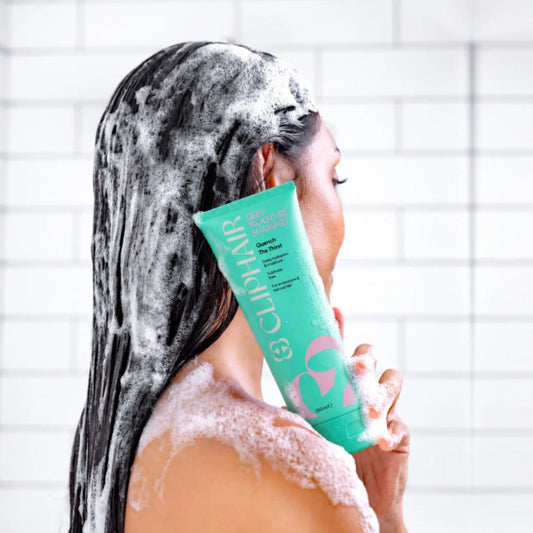
Our own Quench the Thirst range at Cliphair is an excellent example of a collection of haircare products that have been designed with Remy hair specifically in mind. So, you’ll be able to count on them helping to keep your hair feeling hydrated and manageable.
Why not explore more on this topic with our guide to some of the best shampoos and conditioners, or browse our wider haircare collection?
Hair Masks for Extra-Dry, Extra-Tangled Hair
There’s nothing wrong with adding a hair mask to your weekly routine for a little bit of hair care TLC. Regular deep-conditioning treatments help smooth the cuticle and lessen the chances of future tangling.
When your hair is clean and knot-free, apply a few drops of oil, such as olive oil, onto your scalp and hair for 20 minutes. Then, rinse off. You can repeat this once a week.
For best results, why not look out for other oils like coconut and lavender for the ultimate DIY spa session?